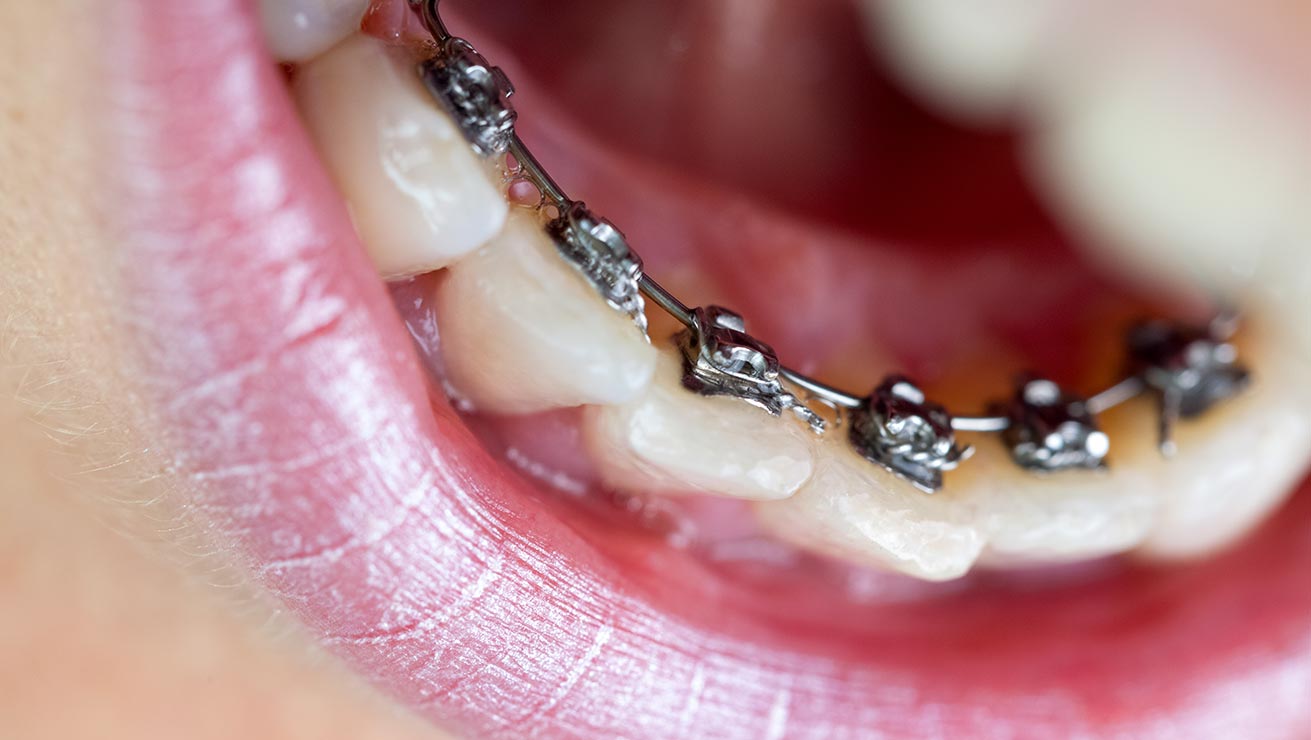
What are Lingual Braces?
In recent years, the use of lingual braces has grown among orthodontists. Along with other advances in orthodontic treatment modalities, customized lingual systems are entering the market and gaining popularity, while traditional systems continue to adapt to digital platforms.
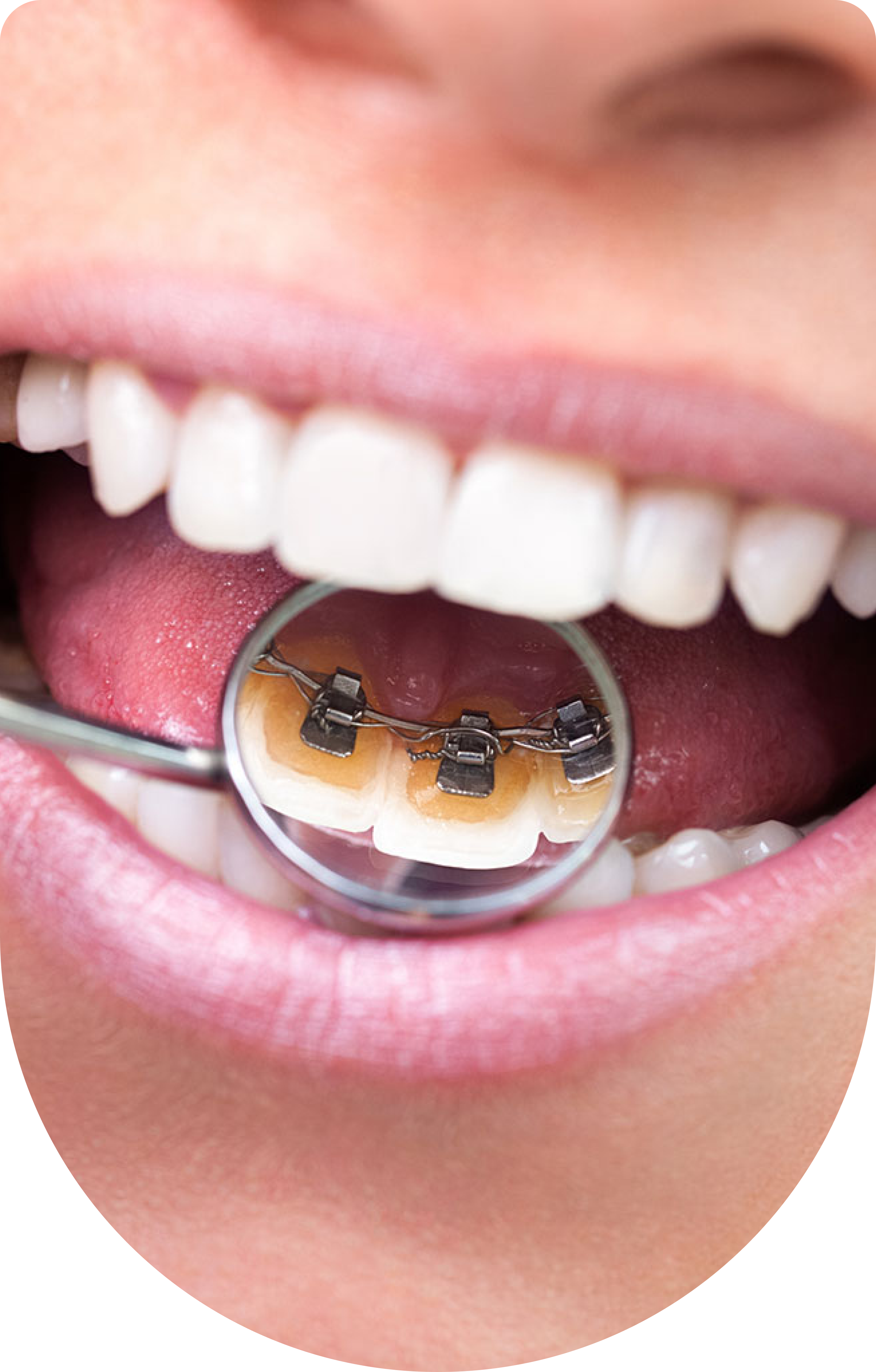
Lingual Braces vs traditional braces
Dental braces, as recommended by the American Association of Orthodontists, play a pivotal role in improving oral health by correcting crooked and crowded teeth, ensuring they align into their correct position for a beautiful smile. Traditional braces treatment involves stainless steel metal brackets and elastic ties attached to each tooth, connected by rubber bands or ligatures to gradually shift teeth into a new position.
For those concerned about aesthetics, tooth-colored clear braces or lingual braces, which are placed behind the teeth, offer a less visible alternative. Lingual means “on the side facing the tongue.” So, lingual braces are just like traditional ones, except that the brackets and archwire are placed on the back of the teeth, where they are out of sight. Lingual braces are placed on the back of your teeth. These are truly invisible braces. These are great esthetci alternative for
traditional metal braces.
Because they are not visible, lingual braces are a great choice for teens and adults. Another advantage is that lingual braces can be more efficient in achieving certain movements as compared to labial (conventional) braces, as well as clear aligners. An example of this is opening a deep overbite. This is the same for a patieint with spacing. Lingual braces are an excellent option for patients who are focused on an aesthetic orthodontic treatment option, and want to avoid the challenges associated with clear aligners. Unlike traditional braces, lingual braces are hidden from view. They are also extremely effective at correcting the alignment of teeth and the bite.
Advantages of Lingual Braces
You’re trying to weigh up the pros and cons of lingual braces vs traditional braces in your head.
Lingual orthodontic treatment is similar to orthodontc treatment with braces on front of the teeth. A limited number of orthodontists offer this solution to correct malocclusion.
We’re here to help. Here are some of the main advantages of lingual braces:
Lingual appliances are placed behind the teeth, so they are truly invisible. Patients in a professional or educational setting don’t have to worry about distracting look of conventional braces. Clear aligners provide a partially invisible option to patients yet attachments (tiny anchors) on front teeth can be noticeable.
Like labial (conventional) orthodontic systems, lingual braces are fixed. The brackets are cemented to the back of the teeth and the archwires are adjusted when the movement of the teeth is needed. There is no need to worry about removing, cleaning, or storing of your orthodontic appliances such as clear aligners like Invisalign, so there is no risk of losing them. Lingual braces require less maintenance than clear aligners, so they are well suited for those with a busy lifestyle.
Patients might experience discomfort with lingual braces, for which over-the-counter pain relievers are often suggested. To prevent tooth decay and maintain braces, the use of a specialized toothbrush, flosser, and a custom designed mouthguard, especially for those engaging in sports, is crucial.
Compared to clear aligner therapy, lingual braces are significantly more efficient at certain tooth movements. The position of these fixed appliances behind the teeth allows them to move teeth quickly and efficiently. The continuous light forces by these appliances is unique to alternative esthetic options namely clear aligners.
Are lingual braces painful?
The question of lingual braces and pain is a common one. As we mentioned before, the lingual system is vastly different from other orthodontic appliances because the brackets and wires are placed behind the teeth rather than on them. It may take time getting used to having the appliance pressed against the inside of the mouth and tongue. Most patients become adjusted to the feeling in 2 weeks. We will walk you through this phase.
Do lingual braces work for everyone?
A major concern with lingual braces is oral hygiene. Like all braces, the brackets and archwires can interfere with a patient’s ability to clean or brush because it’s difficult to reach the gumline when the wires are in the way. Advances in technology provides us with options that help to overcome this issue. For example, the waterpik has been a game changer for all of our lingual patients. Lingual braces like other orthodontic appliances could result in lisp.
Do lingual braces cost more?
Lingual braces are a significant investment. Since they require complex wire patterns and a very technical skill set, appointments to adjust the wires take longer. All of these reasons contribute to a higher cost of treatment than traditional orthodontic procedures, but many patients find the cost of lingual braces is well worth the investment when considering all the factors.
Do all orthodontists do lingual braces?
Because lingual braces are less common than other orthodontic options, there is a very limited number of orthodontists who provide them. At Porth, our orthodontist and clinical assistants have worked with lingual orthodontics extensively, so patients have the option to choose custom lingual orthodontics with expertise supporting their treatment. Schedule a free consultation to learn more.