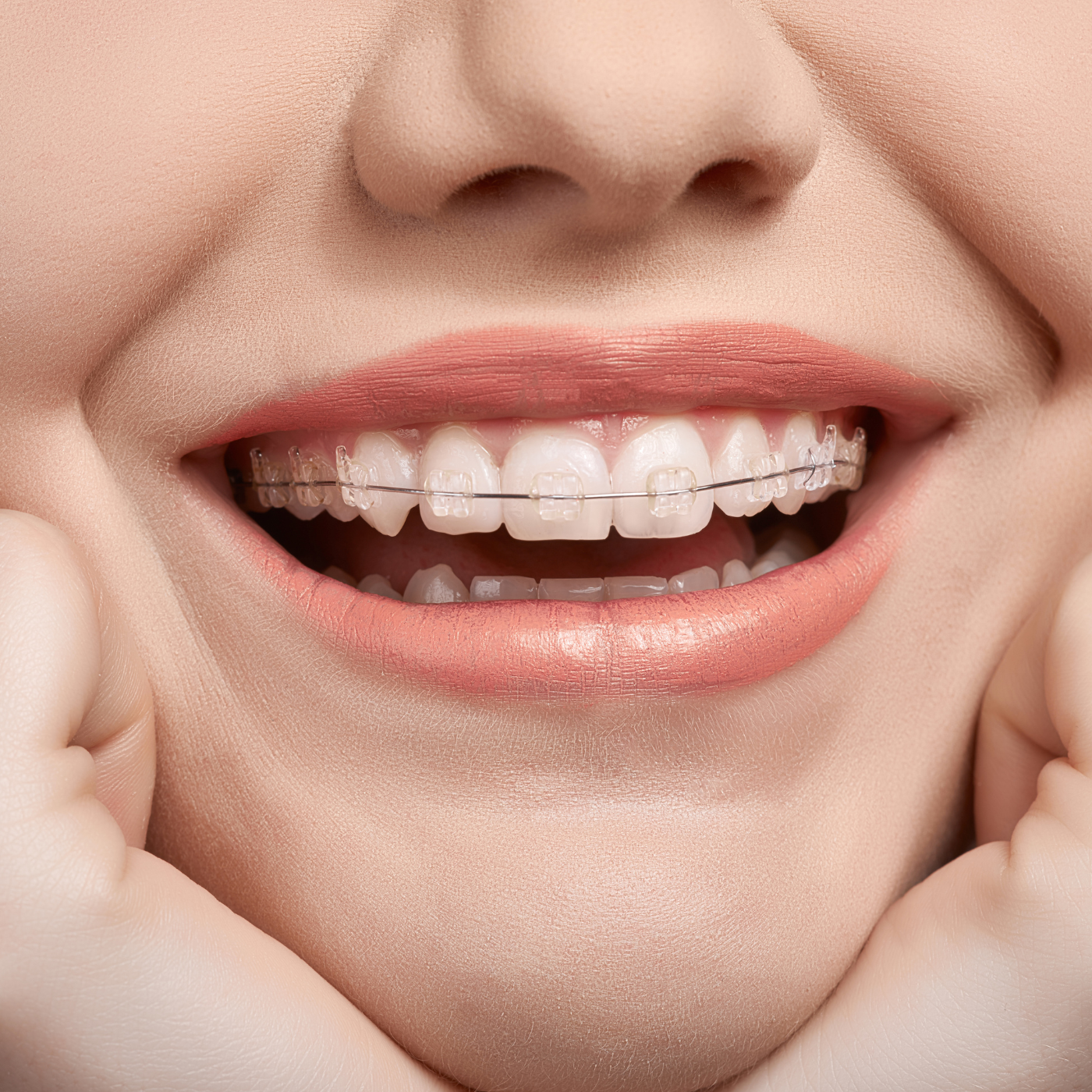
Ceramic Braces
Many people who wear braces to correct their teeth or jaws usually get them during their teenage years, but more adults are wearing braces too.
It’s not easy to see ceramic braces from a distance. That’s why some adults choose to wear ceramic braces instead of metal braces, as it makes them feel less self-conscious about wearing braces.
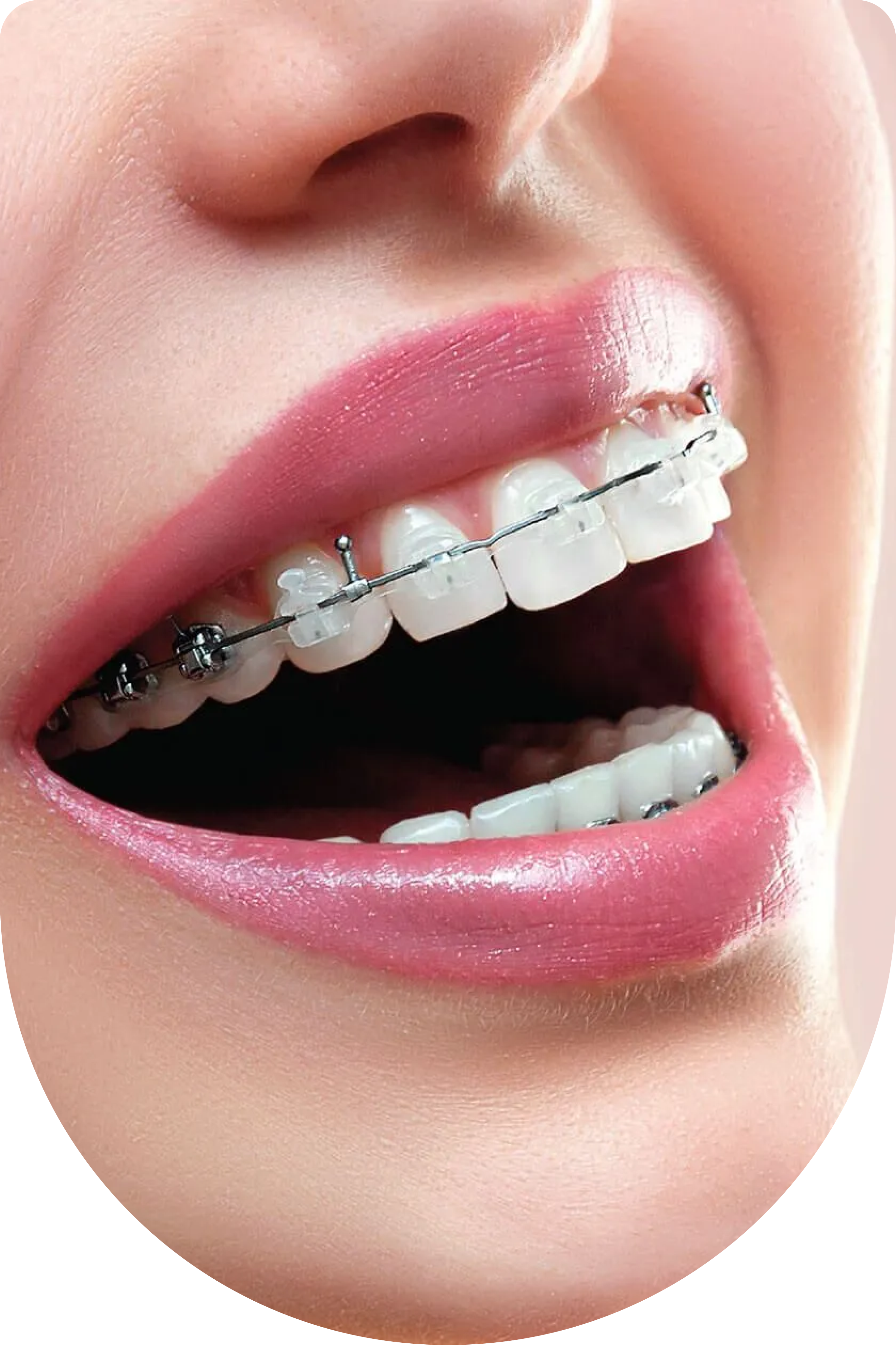
What are Ceramic Braces?
- Ceramic braces were first introduced in 1987. They’re made of aluminum oxide, which, in its most common natural form of corundum, is rated
9/10 on the Mohs scale of mineral hardness, just under diamonds. - The brackets of braces are glued to the surfaces of the patient’s teeth. Brackets can be made of stainless steel, ceramic, or other materials. An
archwire controls the movement of the teeth and connects the brackets and the bands. - Ceramic braces are a popular choice because they’re less noticeable than metal braces. But they do have some disadvantages, which is why some
people may choose to go with a combination of ceramic and metal braces.
How do ceramic braces work?
Orthodontists fit ceramic braces for teeth. The procedure is the same as metal braces. Brackets are bonded to the teeth front. On the other hand, rubber bands are used to support the archwire.
Ceramic transparent braces function the same way as metallic ones. The archwire is connected to each bracket and is designed to address tooth alignment issues and bite replacement. The rubber band ensures the teeth can move properly by holding the archwire.
dvantages of Ceramic Braces
Less visible.
Ceramic brackets can be clear or tooth-colored. They come in different shades of off-white that can be customized to match your teeth. The archwires that connect the brackets are also available in less obvious shades like white. This makes ceramic braces less visible than metal ones.
Less allergenic.
An allergy to the nickel used in dental appliances like braces is the most common allergic reaction seen in dental practices. This leads to nickel-related contact dermatitis. Several types of metallic alloys are used in orthodontics, and most of these include nickel. For instance, stainless steel alloys can contain about 8% nickel.
Less plaque accumulation.
A small study on 20 teens found that those who had ceramic braces had significantly less long-term plaque accumulation on their teeth and brackets than those with metal braces. Plaque is the sticky colorless film that builds up on your teeth and contains bacteria. But there is contradictory evidence on this, as some studies have found no difference in plaque accumulation between the two types of braces, while one study found that metal braces had less plaque accumulation. More studies need to be carried out.
Suitable for imaging tests.
Metal braces can interfere with magnetic resonance imaging (MRI) scans of the head and neck areas and need to be removed before testing. Ceramic braces are MRI safe and don’t have to be removed. But if the ceramic brackets have any metal parts, like stainless steel slots, they may have to be removed before any imaging scans.
More uses than invisible aligners.
Ceramic braces are like conventional metal braces and can be used for various complex dental treatments. Invisible aligners, such as Invisalign and other brands, have some limitations, and are more for those who have minor spacing problems.
Types of ceramic braces
There are mainly three different types of ceramic braces for your teeth. Here you go-
Clear ceramic braces – This brace can be made from ceramic or plastic. Besides, aluminium compounds are used to make clear ceramic braces durable and stain resistant. If your teeth are white, these braces would be great for you. As the material is transparent, it will disappear on the teeth’ surface. The cost of
clear braces may vary based on your oral condition and the expertise of a ceramic orthodontist.White ceramic braces – To create the whitish colour of these brackets, a different aluminium compound is used. The brackets will match your present tooth
shade.
Coloured ceramic braces- Like coloured metal braces, there are variouscoloured elastics. It suits kids’ braces as they might choose the colour option.