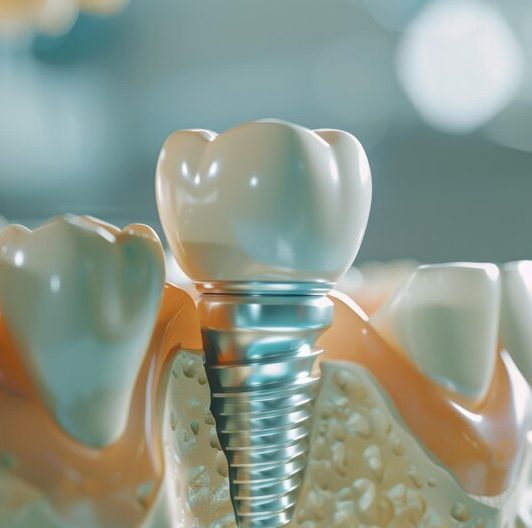
Sinus Lift
Sinus lift surgery, or sinus augmentation, is a common bone grafting oral surgery procedure performed on the upper jaw in order to increase the amount of bone between the maxillary sinuses and the jaw so that dental implants can be successfully placed. Oral surgeons frequently utilize sinus lift surgery to augment the jawbone because the upper jaw is often deficient in bone quality and quantity. The maxillary sinuses are hollow spaces situated behind the cheek bones and above the upper teeth. The roots of those upper back molars often extend into the sinuses. When tooth loss or extraction occurs, little supportive jawbone is left. During sinus lift surgery, the sinus membrane is lifted upward and bone is added between the sinuses and the jaw.

Common Reasons for Having Sinus Lift Surgery
Sinus lift surgery is used in cases where the upper jawbone height is insufficient or the sinuses are too close to the jaw to place dental implants. Jawbone anatomy is such that the upper jaw naturally has less bone than the lower jaw. Some sinus lift patients simply have a smaller jawbone while others have jawbone loss. Sinus augmentation provides a strong bony foundation by bone grafting for dental implants. Factors which can contribute to jawbone loss include:
- Tooth loss: Extraction or missing teeth eventually lead to bone resorption (absorption back into the body) if the space is left vacant.
- Periodontal disease: Gum disease can cause bone loss if left untreated.
- Oral pathology: Cysts or tumors can damage the jawbone.
A toothless, or edentulous, area is known as a ridge. The collapse of the tooth socket, together with an expansion of the maxillary sinus floor (which occurs when a molar is lost), causes the jawbone to thin out, resulting in less volume available for the dental implant. Physiological factors which can necessitate sinus lift surgery include:
- Small jaw
- Location of the sinuses, blood vessels, and nerves
- Large sinus (can enlarge with age) Proximity of adjacent teeth roots
Types of sinus Lift Surgery
YSinus lift surgery is an in-office procedure which is typically performed with local anesthesia or IV sedation. In more complex cases, general anesthesia may be employed. During sinus lift surgery, the sinus is raised and a bone graft is performed to allow for eventual osseointegration, the process in which the regenerated
bone connects with the prosthetic implant. Several techniques are available to perform the sinus lift procedure.
Lateral Window Technique (Direct Sinus Lift Procedure)
Lateral window technique is considered the traditional sinus augmentation surgery during which the oral surgeon makes an incision in the gum, exposing the bone. A window is made into the sinus and the piece of bone cut out is pushed into the sinus cavity. The bone graft is placed in the space underneath. The incision is sutured closed, leaving the bone graft to heal for 4-6 months. In some circumstances, the implant is actually placed at the time of the sinus lift procedure.
Osteotome Technique (Indirect Sinus Lift Procedure)
The osteotome technique is a less invasive sinus lift surgery that can be utilized when over 6mm of natural bone height is present and the sinus floor requires less than 4mm of elevation. A flap of gum tissue is cut to form a socket in the bone. An osteotome is used to tap the sinus floor into proper position. The dental implant is typically placed during the osteotome sinus lift surgery, and bone integration takes approximately 4-6 months.
What Happens Before, During, and After a Sinus Lift?
Before a Sinus Lift
A sinus lift involves transferring a bone to your upper jaw. The first step in the procedure is to determine the source of the bone for the surgery. Some of the common types of bone used in sinus augmentation include:
- An autogenous bone usually taken from an area of your mouth
- A synthetic bone-like material
Once the bone source is identified, Dr. Trujillo will study your jaw and sinus anatomy to establish its condition. Accurate measurements are also taken to determine the width and height of your existing bone. X-rays or computed tomography scans will allow Dr. Trujillo to assess your overall jaw health and other vital skull structures.
During the Procedure
There are several approaches to sinus lift surgery. The right technique for you depends on several factors, including the type of bone graft and how much bone you currently have in your jaw. Some of the basic steps include:
- Receiving intravenous or oral sedatives to numb the area and keep you as comfortable as possible during the procedure
- Incisions on the back parts of your gum tissue to expose the bone
- Cut a small area of the bone while taking necessary precautions not to cut the sinus membranes
- Lift the cut portion of the bone up into the sinus cavity to raise the membrane
- Apply bone graft materials on the lifted area before applying sutures to close the incisions in your gums
After the Surgery
Following the procedure, the dental specialist will provide instructions that guide your recovery. You may experience some side effects, including swelling and bleeding. However, this discomfort rarely lasts a few days. For a quick and successful recovery, your doctor may recommend that you:
- Don’t smoke as this impairs your healing time
- Avoid brushing teeth for a specific time to prevent dislodging clots
- Avoid vigorous blowing of nose and sneezing
- Do not use a straw as this may dislodge clots
- Take antibiotics to prevent infections
- Take pain relievers to relieve discomfort
Usually, you need a checkup one week after the procedure. During this appointment, the Dr. Trujillo will examine the surgical site and remove any stitches that have not dissolved on their own. However, if you experience any pain that keeps worsening or have uncontrollable bleeding, don’t wait. Call Dr. Trujillo right away
Recovery From Sinus Lift Surgery
Your recovery time will depend on the type of sinus lift surgery you undergo. Other than avoidance of strenuous activities, most patients do not have any major limitations. You may experience some swelling around the surgical site and light bleeding from the nose or mouth. Most patients have little discomfort after their sinus lift procedure. Your surgeon will prescribe medication, which may include:
- Antibiotics and antimicrobial mouthwash: To prevent infection
- Pain medicine: To alleviate any discomfort
- Decongestants or saline spray: To keep nose clear and moist
- Anti-inflammatories: To reduce swelling
Your surgeon will provide detailed post-operative instructions after your sinus lift surger.